



Introduction: The Tale of a Sunken Land
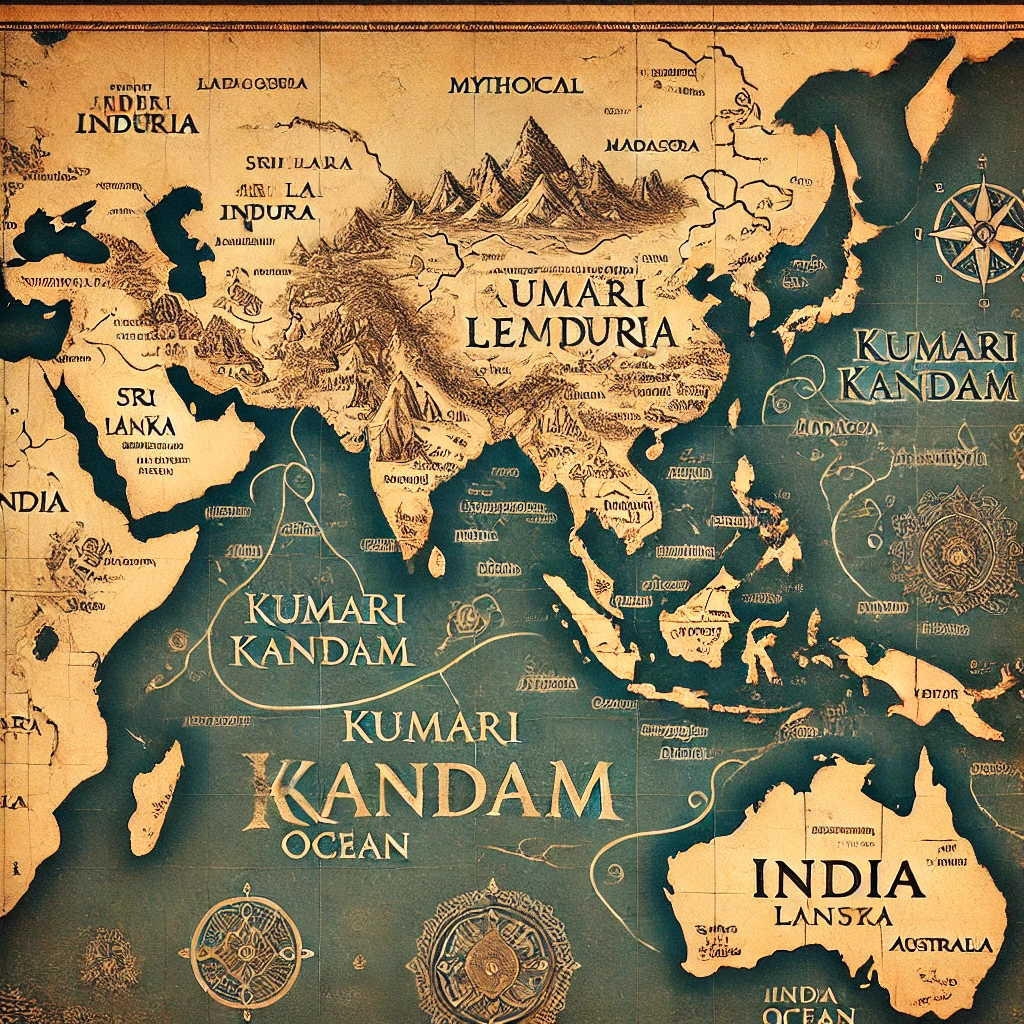
Imagine a landmass stretching across the Indian Ocean, connecting the lands of India, Sri Lanka, Madagascar, and Australia. A place teeming with ancient civilizations, rich culture, and profound wisdom—only to be lost beneath the waves of time. This is the legend of Lemuria, often intertwined with the Tamil myth of Kumari Kandam. But was it real? Is there scientific evidence supporting its existence, or is it purely a creation of myth and misplaced theories?
The Origins of Lemuria: Science or Speculation?
The idea of Lemuria first emerged in the 19th century when scientists attempted to explain the presence of similar fossils in India, Madagascar, and Africa. Philip Sclater, a British zoologist, noticed that lemur fossils were found in multiple regions but not in mainland Africa or the Middle East. To bridge this gap, he proposed the existence of a submerged continent—Lemuria.
This theory seemed logical for a time, especially in an era before plate tectonics. However, as geological science advanced, the idea of Lemuria as a single landmass became less credible. Instead, continental drift and seafloor spreading provided more logical explanations for similar fossils found across continents.
Kumari Kandam: Tamil Nadu’s Sunken Kingdom
While Lemuria became a pseudoscientific theory, the Tamil legend of Kumari Kandam remained deeply ingrained in South Indian culture. Ancient Tamil literature describes a vast kingdom ruled by the Pandyan kings, stretching across what is now the Indian Ocean. This civilization is believed to have been the cradle of Tamil culture, rich in art, literature, and advanced knowledge systems.
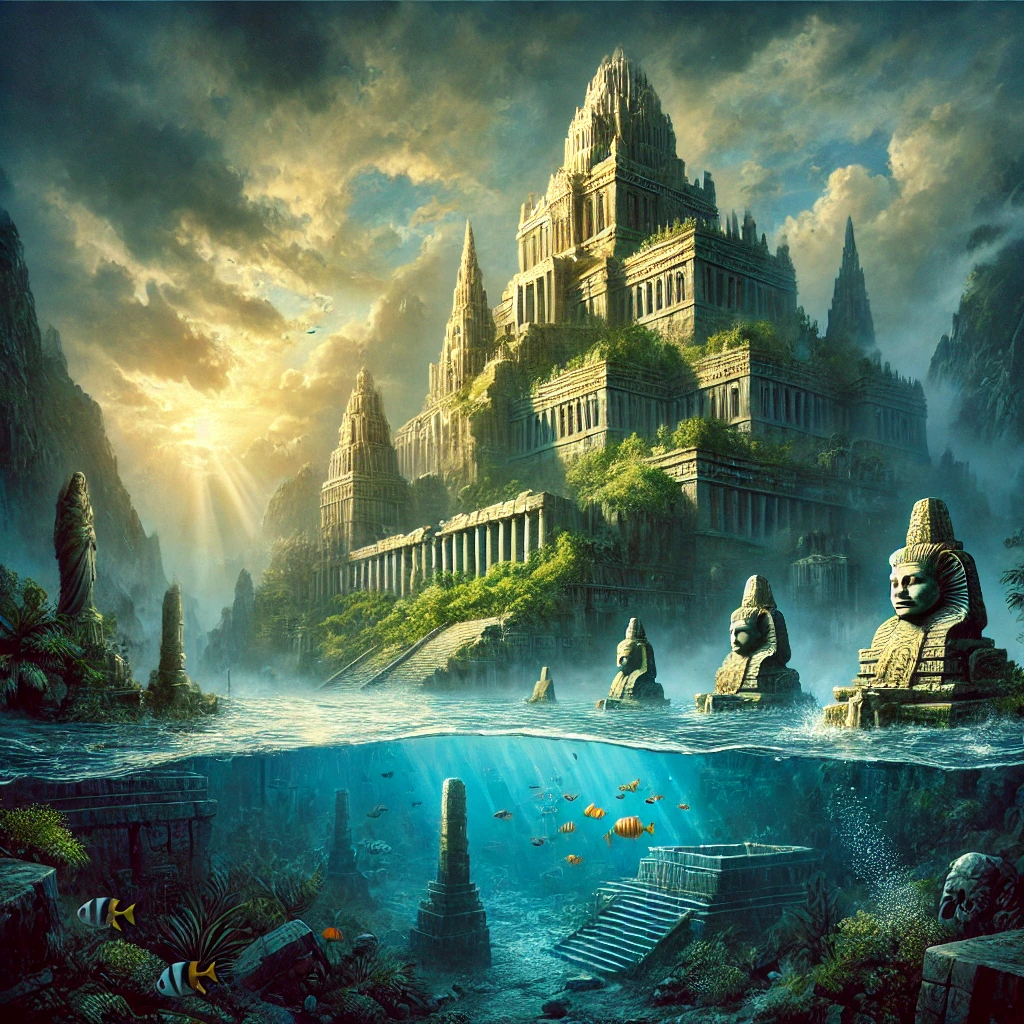
According to Tamil texts, a massive flood submerged Kumari Kandam, forcing its people to migrate to different parts of India and beyond. This theory aligns with similar flood myths in various cultures, from the biblical Noah’s Ark to the Sumerian Epic of Gilgamesh.
The Science Behind Sunken Lands- Lemuria
While no geological evidence supports the existence of a massive continent like Lemuria, submerged landmasses do exist. The Indian Ocean has remnants of ancient landmasses, such as the now-submerged island of Dvaraka, mentioned in Hindu mythology, and the underwater ruins of Poompuhar, an ancient Tamil city.
Additionally, the discovery of the lost continent of “Mauritia” beneath the Indian Ocean provides some scientific validation to the idea that landmasses have disappeared due to tectonic shifts. However, Mauritia predates human civilizations, making it unlikely to be the legendary Kumari Kandam.
Connecting Myth with History
So, how do we reconcile the myth of Kumari Kandam with history? One possibility is that Tamil literature and oral traditions have preserved a memory of real, smaller-scale geological events—such as rising sea levels or localized flooding—that led to the displacement of early Tamil-speaking communities.
Archaeological sites like Poompuhar and Dwaraka suggest that parts of South India’s coastline have indeed been swallowed by the sea, reinforcing the belief that historical truths could be embedded within ancient myths.
Cultural Impact and Modern Interpretations
The legend of Lemuria and Kumari Kandam has inspired various fields, from literature to modern Tamil nationalism. Some view Kumari Kandam as the true origin of Dravidian culture, arguing that it was a sophisticated civilization that predated even the Indus Valley Civilization.
In pop culture, Lemuria has been associated with mystical and esoteric traditions, much like Atlantis. Theosophists like Helena Blavatsky believed that Lemuria was home to an advanced spiritual race, influencing modern theories about lost civilizations and extraterrestrial connections.
Conclusion: Fact, Fiction, or Something In-Between?
The lost continent of Lemuria may be a debunked scientific hypothesis, but its legacy persists through myth, literature, and cultural identity. Similarly, Kumari Kandam, though lacking direct archaeological proof, remains a powerful symbol of Tamil heritage and resilience.
Whether these lands were real or metaphorical, they remind us that history is often a blend of fact and folklore. As science continues to explore the mysteries of the past, who knows what discoveries might reshape our understanding of ancient civilizations?


