



The ocean is full of mysteries, and one of the most intriguing creatures that have recently captured global attention is the oarfish, often dubbed the “Doomsday Fish.” This deep-sea giant has been linked to folklore, myths, and natural disasters. With recent sightings along Mexico’s Pacific coast, speculation is rife about what it could mean for the world. Is it an omen of disaster, or is there a scientific explanation behind its unusual appearance near the shore? Let’s dive into the facts!
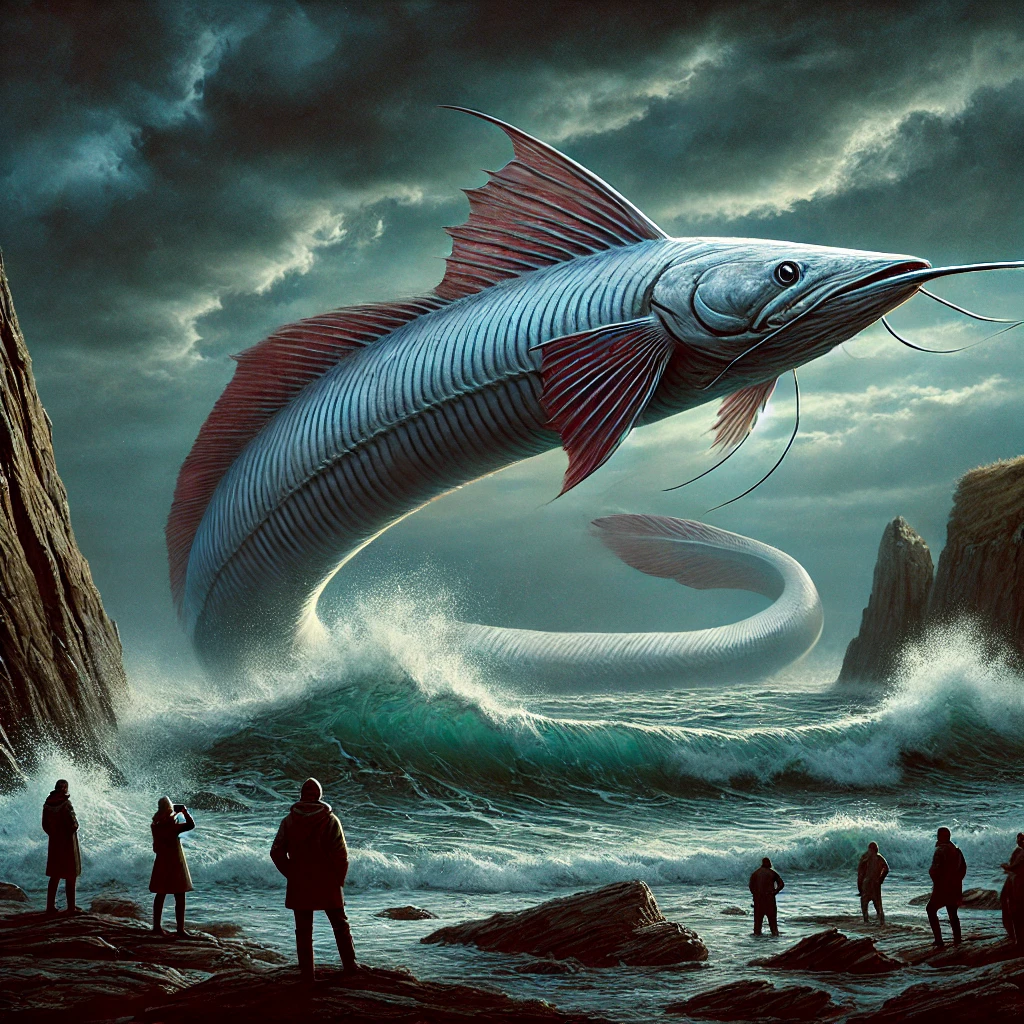
1. What Is the Doomsday Fish?
The oarfish (Regalecus glesne) is one of the longest bony fish in the ocean. It can grow up to 36 feet (11 meters) in length and is often mistaken for a sea serpent due to its slender, ribbon-like body. The fish has a silvery sheen, a bright red dorsal fin, and an eel-like movement, making it an eerie sight when spotted near the surface.
Oarfish usually inhabit the twilight zone of the ocean, around 200 to 1,000 meters (656 to 3,280 feet) below sea level. They rarely surface unless they are sick, injured, or experiencing changes in their deep-sea environment.
2. Why Is It Called the “Doomsday Fish”?
The name “Doomsday Fish” comes from Japanese folklore. In Japan, the oarfish is known as “Ryugu no Tsukai,” which translates to “Messenger of the Sea God.” Ancient legends claim that these creatures appear before major natural disasters, especially earthquakes and tsunamis.
This belief gained traction in 2011 when several oarfish washed ashore in Japan just before the devastating 9.1 magnitude earthquake and tsunami. Similar incidents have occurred before other seismic activities, fueling speculation that oarfish may be a natural warning system.
3. The Recent Sightings in Mexico
In early 2025, several oarfish were spotted near the shores of Mexico’s Pacific coast. Fishermen and beachgoers were stunned to see these deep-sea dwellers so close to land. The event quickly went viral on social media, with many people fearing an impending disaster.
According to reports, three oarfish were found, leading some to believe that three major events could follow. While this is purely speculative, it has reignited debates on whether there is any truth to the Doomsday Fish prophecy.
4. Do Oarfish Predict Earthquakes?
Many believe that oarfish can detect seismic activity before humans do. The theory suggests that these fish are sensitive to underwater disturbances, such as shifts in tectonic plates, which could force them to surface.
However, marine biologists remain skeptical. According to experts, there is no scientific evidence directly linking oarfish to earthquake predictions. While the coincidence is fascinating, it is more likely that changes in ocean temperature, currents, or underwater volcanic activity could be responsible for their unusual behavior.
5. Possible Scientific Explanations for Their Appearance
Several scientific reasons could explain why oarfish are washing ashore:
- El Niño and La Niña Phenomena: Changes in ocean temperature and currents can disorient deep-sea creatures, forcing them to the surface.
- Illness or Injury: A sick or injured oarfish may struggle to stay in its natural habitat and drift towards shallow waters.
- Environmental Pollution: Increasing pollution levels in the ocean may be affecting marine life, leading to more frequent sightings of deep-sea creatures.
- Natural Death: Like all marine animals, some oarfish may naturally die and get carried by currents to coastal regions.
6. The Hunting and Diet of the Oarfish
Despite its enormous size, the oarfish is a gentle giant. It feeds primarily on plankton, krill, shrimp, and small fish. Unlike predators such as sharks or barracudas, oarfish do not have strong jaws or sharp teeth. Instead, they use a filter-feeding mechanism to consume their prey.
Interestingly, scientists have not yet discovered the full details of the oarfish’s hunting behavior, adding to the mystery surrounding this deep-sea creature.
7. Should We Be Worried?
While the sight of an oarfish near the shore is rare and fascinating, there is no conclusive evidence that it signals an impending disaster. The best approach is to analyze the facts, separate myth from reality, and listen to scientific explanations rather than panic.
Final Thoughts
The oarfish remains one of the ocean’s greatest mysteries. Whether it is a harbinger of disaster or simply a victim of environmental changes, its presence continues to captivate scientists and mythologists alike. While legends add an air of intrigue, scientific research is essential to truly understand this fascinating creature.
So, the next time you hear about a Doomsday Fish washing ashore, take a moment to appreciate the wonders of the deep sea—and maybe, just maybe, keep an eye on the seismic reports, just in case! 🐟🌊🌍


