



Introduction
The world of surveillance technology is advancing rapidly. China has once again made headlines with its latest innovation—a spy camera capable of capturing details from a staggering 100 km away. This groundbreaking discovery has sparked discussions about its applications in defense, intelligence gathering, and space research. But how does this camera work, and what does it mean for global security? Let’s dive deep into the technology behind China’s spy camera and its potential implications.
The Evolution of Camera Technology
From the early days of photography to the modern era of smartphone cameras and DSLRs, imaging technology has come a long way. Today, drones equipped with high-resolution cameras play a significant role in surveillance, whether for military operations or everyday events like weddings. However, China’s latest breakthrough takes surveillance capabilities to an entirely new level.
The Role of Satellites in Surveillance
Satellites have long been used for Earth observation. These powerful machines help monitor weather patterns, track climate changes, and even assist in disaster management. But can we observe satellites from Earth? More importantly, can we capture minute details such as the serial numbers on satellites orbiting the planet?
China’s Groundbreaking Spy Camera
What Makes This Camera Unique?
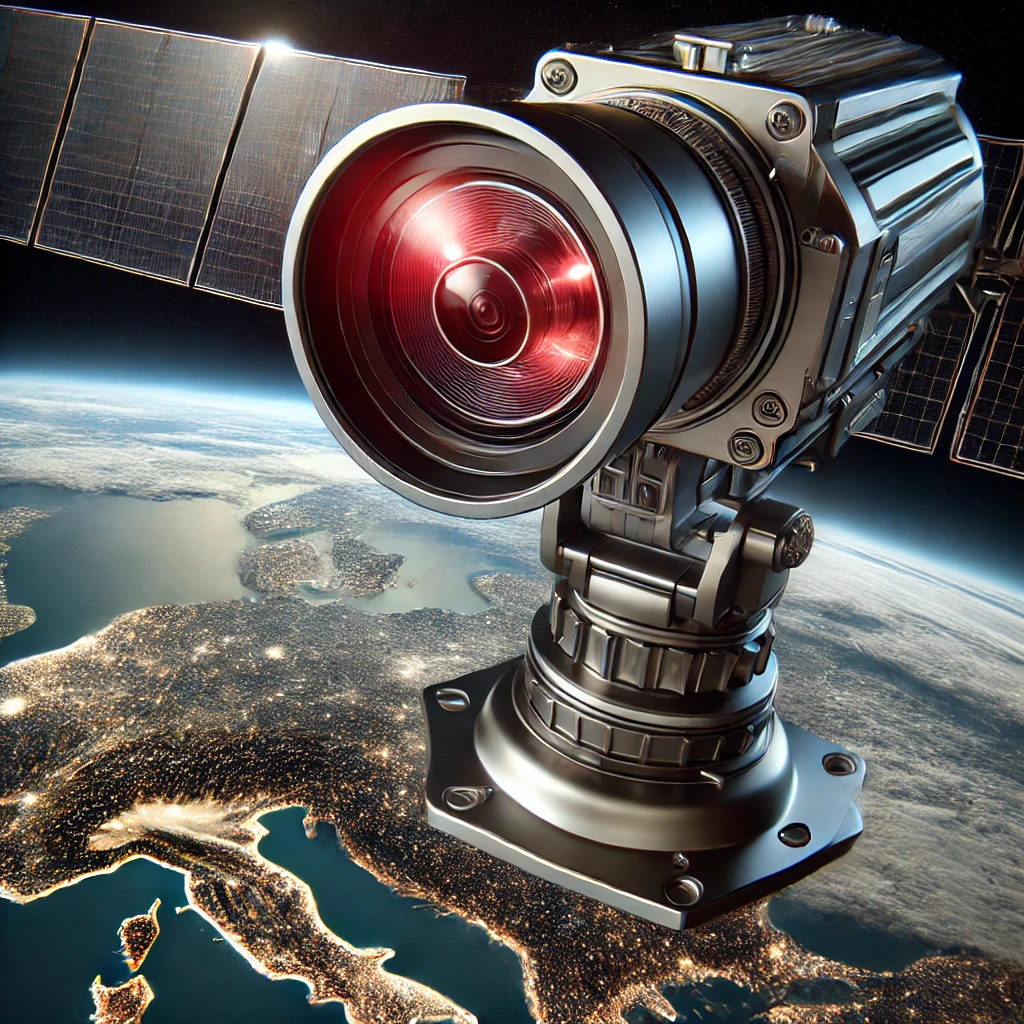
China’s new spy camera is claimed to be the most powerful in the world, capable of capturing high-resolution images from 100 km away. The camera is said to be based on a laser-imaging system, making it highly precise. Here’s what makes it revolutionary:
- 100 km range: This distance is far beyond what traditional spy satellites and telescopes can achieve.
- Extreme clarity: The camera can reportedly capture small details, such as satellite serial numbers.
- Laser-based imaging: This technology allows for sharper images with minimal distortion.
- Super-resolution algorithm: It enhances low-quality images to extract clear, identifiable features.
- AI-driven facial recognition: The system can detect and track individuals from vast distances.
Comparison with Existing Spy Cameras
China’s latest innovation is said to be 100 times more powerful than existing spy cameras used in intelligence operations. To put this into perspective:
- Lockheed Martin’s 2011 Defense Camera: Capable of capturing images from 1.6 km away with a resolution of 0.8 inches.
- China’s 2024 Prototype: Achieved a resolution of 5 cm from 6.9 km away.
- The Latest Model (2025) can capture details at 100 km with a resolution of 0.8 inches.
The Technology Behind It
The secret to China’s success lies in a combination of:
- Synthetic Aperture LIDAR – A cutting-edge imaging technique that uses laser beams to reconstruct detailed images.
- 103-Watt Laser – Used to penetrate atmospheric disturbances and enhance image clarity.
- 4×4 Micro Lens Array – Improves focusing capabilities.
- Optical Aperture Adjustments – Ranges from 17.2 mm to 68.8 mm for ultra-clear images.
- AI & Edge Computing – Enables real-time analysis and image enhancement.
Potential Applications
Military & Defense
The primary application of such a powerful camera lies in national security. China can use this technology to:
- Monitor enemy military bases from a safe distance.
- Tracked naval fleets and aircraft movements.
- Identify and neutralize potential threats before they escalate.
- Enhance drone surveillance and improve precision strikes.
Space Exploration & Satellite Maintenance
- Monitoring Satellites: This camera can help analyze potential issues in satellites, such as damage from space debris.
- Identifying Satellite Collisions: If two satellites collide, detailed imagery can help assess the damage and determine the cause.
- Enhancing Space Missions: It can assist in high-precision navigation and mission planning.
Facial Recognition & AI Integration
China’s spy camera is reportedly integrated with AI-powered facial recognition. This means:
- Tracking individuals in real-time over long distances.
- Identifying terrorists and criminals with high accuracy.
- Enhancing border security and law enforcement efforts.
Disaster Management
- Assessing damage after natural disasters (earthquakes, floods, fires) in real time.
- Assisting in rescue operations by identifying trapped individuals from a distance.
The Ethical Concerns
Surveillance and Privacy
While this technology has many benefits, it also raises serious ethical concerns. If such a powerful camera falls into the wrong hands, it could lead to mass surveillance and privacy violations.
- Citizen monitoring: Governments could use it to monitor their citizens without consent.
- Espionage: Nations could spy on each other, leading to diplomatic tensions.
- AI-driven control: With facial recognition, it could be used to track and control people on a large scale.
The Global Response
This development has not gone unnoticed by other nations. The United States, India, and European countries are closely monitoring China’s advancements in spy technology. The response could include:
- Developing counter-surveillance technology to prevent unauthorized spying.
- Stronger cybersecurity measures to protect sensitive locations.
- International regulations to govern the use of such high-tech surveillance equipment.
The Future of Spy Cameras
Will Other Countries Follow Suit?
Given the potential of China’s spy camera, other countries may soon develop their versions. We may see advancements such as:
- More powerful AI-driven cameras with better object recognition.
- Compact versions of spy cameras that can be mounted on drones.
- Improved stealth technology makes such surveillance undetectable.
Could India Develop a Similar Camera?
India has a strong space and defense research sector, with organizations like ISRO and DRDO leading technological advancements. With proper funding and research:
- Indian scientists could develop a similar or even more advanced system.
- Collaborations with international tech firms could accelerate the process.
- Students and engineers must be encouraged to work on high-resolution imaging projects.
Conclusion
China’s 100 km spy camera is a game-changer in the field of surveillance and defense. While its applications are vast, it also poses serious ethical and security challenges. The world must now decide how to respond to this breakthrough—whether by competing with similar technology or by establishing regulations to control its use.
What do you think about this development? Should other nations invest in similar technology, or should we be concerned about the potential risks? The future of surveillance is unfolding before our eyes, and it is up to us to shape it responsibly.


