



The war in Syria, a brutal conflict that has raged for over a decade, shows no signs of abating. What began as a peaceful uprising in 2011 has morphed into a complex web of alliances and hostilities, with regional and global powers vying for influence. This blog dives deep into the Syrian conflict, unpacking the key players, their motivations, and the recent escalation that has many fearing a wider war.
A Nation in Turmoil: The Roots of the Conflict
Syria’s descent into chaos can be traced to a combination of factors. Long-standing discontent with the authoritarian rule of President Bashar al-Assad, coupled with economic stagnation and social repression, fueled the initial protests in 2011. The Assad regime’s brutal crackdown on peaceful demonstrations triggered an armed rebellion, marking the beginning of the civil war.
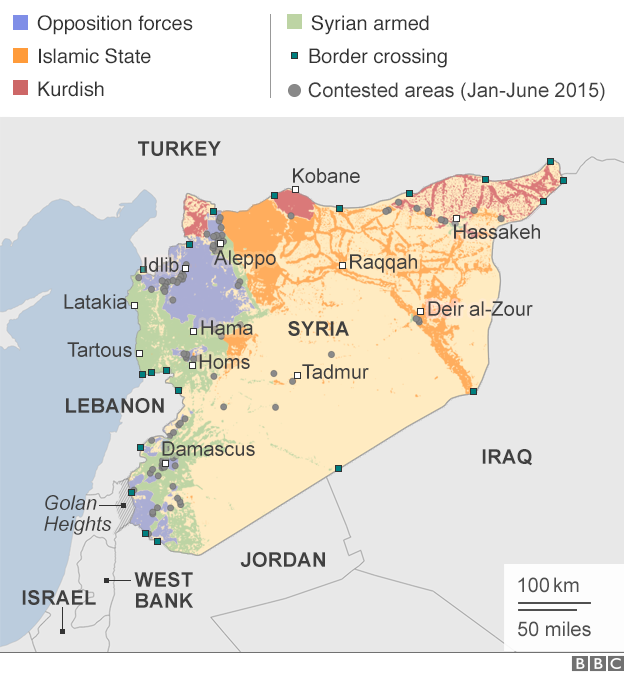
Proxy War: Regional and Global Powers Take Sides
As the conflict intensified, regional and global powers entered the fray, transforming the Syrian civil war into a proxy battleground. Here’s a breakdown of the key players and their interests:
Assad Regime: Backed by Russia and Iran, Assad seeks to retain power and crush the rebellion. Russia provides crucial military support, while Iran supplies fighters and financial assistance.
Opposition Groups: A fractured and diverse group, the Syrian opposition includes moderate rebels, Islamists, and jihadists. They receive varying degrees of support from the US, Turkey, and Gulf states.
Israel: Primarily concerned with the Iranian presence near its border and the activities of Hezbollah, a Lebanese militant group backed by Iran, Israel conducts airstrikes against targets in Syria linked to these groups.
Turkey: Opposed to the Assad regime and seeking to contain Kurdish aspirations for autonomy in northern Syria, Turkey supports some rebel groups and maintains a military presence in the region.
The United States: While initially hesitant to intervene directly, the US has provided limited support to moderate rebels and focused on countering the rise of ISIS (Islamic State of Iraq and Syria).
The involvement of these external actors has fueled the flames of conflict, leading to a protracted stalemate. Proxy wars are fought not for the sake of the Syrian people but for the strategic interests of foreign powers, further complicating any potential resolution.
Aleppo: A Turning Point, Yet More Instability
The recent escalation in Aleppo, Syria’s second-largest city, highlights the precarious situation. A group of rebel factions, including some designated as terrorist organisations, launched an offensive, capturing parts of the town previously held by Assad’s forces. This resurgence of opposition groups is attributed to several factors:
- Regrouping: The relentless offensives by Israel, Russia, and the Assad regime against groups like Hamas and al-Qaeda may have inadvertently allowed them to regroup and rearm.
- Strategic Shift: The ongoing war in Ukraine has diverted some of Russia’s military resources, potentially weakening its support for Assad.
- Internal Conflicts: Economic hardship and dissatisfaction with the Assad regime may be fueling renewed dissent within government-controlled areas, creating opportunities for the opposition.
The recapture of territory by rebel groups has triggered a fierce response from Assad’s forces backed by Russian airstrikes. This renewed fighting raises concerns about a wider escalation and the potential for a protracted, low-intensity conflict.
Beyond the Headlines: The Human Cost of War
The Syrian conflict has had a devastating impact on the Syrian people. Millions have been displaced internally and externally, forced to flee their homes due to the violence. The war has also caused a severe humanitarian crisis, with widespread food insecurity, lack of access to healthcare, and a crumbling infrastructure.
The psychological toll of the war is equally devastating. Children have grown up amidst violence, and an entire generation bears the scars of trauma. Rebuilding Syria, both physically and emotionally, will be a long and arduous process.
Is There Hope for Peace? The Path Forward
Ending the Syrian conflict requires a multi-pronged approach:
- Ceasefire and Political Negotiations: A genuine ceasefire and a return to UN-backed peace talks are crucial to find a political solution. All parties involved, including the Assad regime and the opposition, need to commit to a peaceful resolution.
- Accountability for War Crimes: Addressing war crimes committed by all sides is essential for healing and reconciliation. International efforts to hold perpetrators accountable could deter future atrocities.
- Humanitarian Aid and Reconstruction: It is vital to address the immediate humanitarian needs of the Syrian people and provide resources for reconstruction.
- Withdrawal of Foreign Forces: The de-escalation of the conflict necessitates the withdrawal of foreign forces that are not part of a UN-mandated peacekeeping mission.
The path to peace in Syria is arduous riddled with complex geopolitical interests. However, a concerted effort from the international community and a genuine commitment from all parties within Syria can pave the way for a lasting solution.


