



A Budget of Gains and Pains: What’s Cheaper & Costlier?
India’s Budget 2025 has delivered a mix of relief and strain for the middle class. While certain essential goods and industries will benefit from tax reductions, others will see price hikes that could pinch the consumer’s wallet. Let’s break down the three biggest wins and losses from this year’s budget.
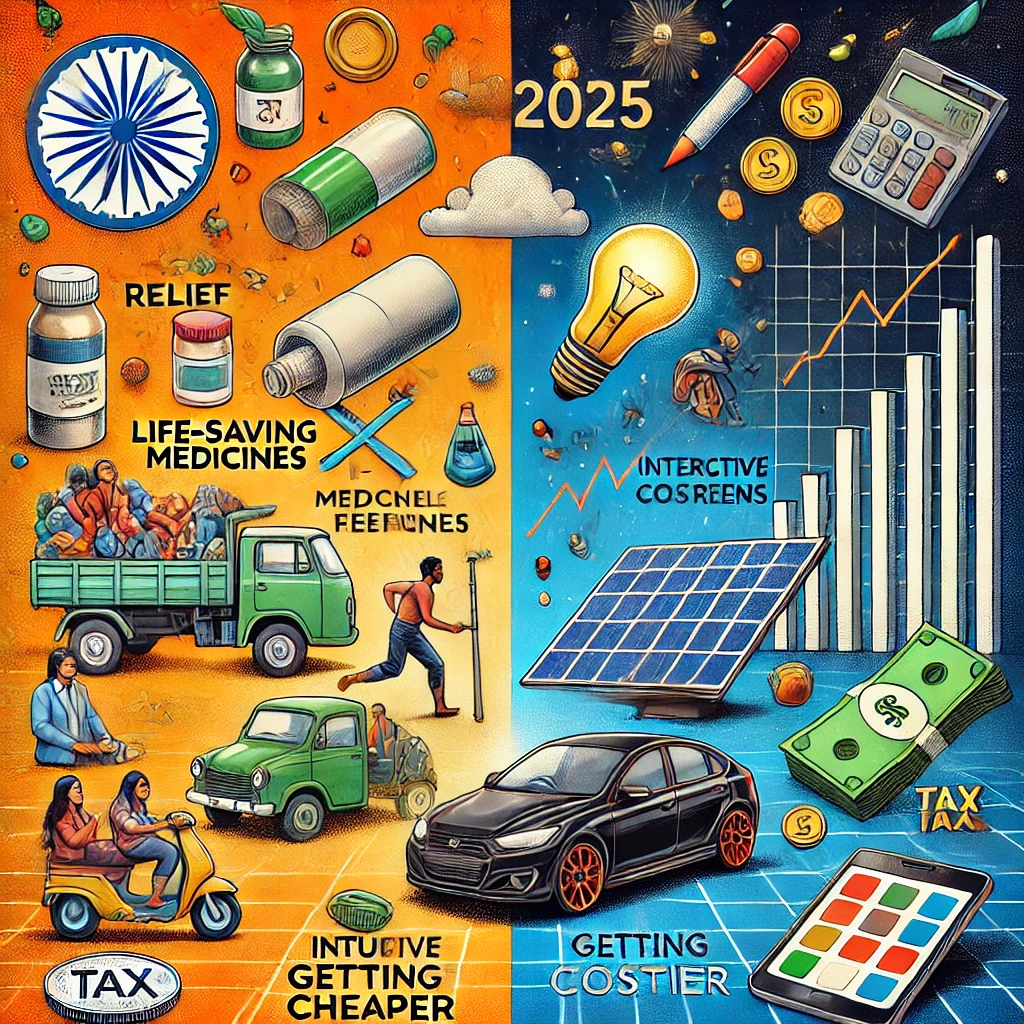
💰 WIN #1: Life-Saving Medicines Become More Affordable
One of the most significant budgetary moves is the exemption of customs duties on 36 life-saving drugs. This includes critical cancer treatment medications like Trastuzumab, Durextican, Osimertinib, and Durvalumab. With healthcare costs already a major concern, this move is expected to bring much-needed financial relief to patients battling serious illnesses.
The pharmaceutical industry is set to benefit as well, with lowered costs on essential drugs boosting accessibility. Additionally, hospitals and medical research institutions might also experience a reduction in procurement expenses, further driving affordability in healthcare. As India continues to invest in its healthcare infrastructure, this step could lead to better patient outcomes and more widespread medical treatments.
📱 WIN #2: Cheaper Smartphones & EVs
The government has reduced customs duties on key components used in mobile phone manufacturing. This could lead to lower prices for smartphones, making advanced technology more accessible. More affordable smartphones will support the growing digital ecosystem in India, which relies on mobile internet penetration for education, banking, and communication.
Additionally, India’s push for electric vehicle (EV) adoption is evident in the exemption of duties on 35 essential lithium battery components. The price drop in batteries is expected to lower the cost of EVs, encouraging a greener future. The government aims to promote sustainability and a shift away from fossil fuels, aligning with its long-term goal of reducing carbon emissions. As more affordable EVs hit the market, consumer adoption is likely to rise, further pushing India toward an eco-friendly transportation model.
🚢 WIN #3: Boost for Shipbuilding & Critical Minerals
To encourage domestic shipbuilding, the government has waived customs duties on raw materials for the next ten years. This will give a massive boost to the Indian maritime industry, supporting local manufacturing and reducing dependency on foreign suppliers. With India’s expansive coastline and increasing global trade, strengthening the domestic shipbuilding industry could enhance the country’s economic growth and employment opportunities.
Furthermore, reduced tariffs on essential minerals like cobalt, lead, and zinc will positively impact multiple sectors, from electronics to renewable energy. Industries dependent on these minerals for production will experience cost savings, which could translate to lower consumer prices and increased industrial competitiveness.
❌ LOSS #1: Expensive Interactive Flat Screens
Bad news for schools and offices looking to upgrade their interactive displays—customs duties on these screens have doubled from 10% to 20%. This will increase costs for businesses and educational institutions reliant on digital teaching tools. The rising costs might deter some institutions from investing in these technologies, potentially impacting digital learning and corporate training programs.
While the government’s intent may be to encourage domestic production, in the short term, consumers and organizations dependent on these tools will feel the pinch. Indian manufacturers may need time to catch up to the quality and pricing of global suppliers, making this an area to watch closely.
❌ LOSS #2: Higher Costs for Imported Footwear & Fabrics
Fashion enthusiasts and manufacturers dealing in imported knitted fabrics and footwear will feel the heat. The government has increased tariffs on these products, making them pricier. This could impact both direct consumers and industries reliant on these imports.
As India pushes for self-reliance, local producers may benefit from reduced foreign competition. However, premium brands and high-quality foreign fabrics may become less accessible to consumers who prefer international styles. The textile and fashion industries will need to adapt by sourcing alternative materials or enhancing domestic production capabilities.
❌ LOSS #3: Solar Cells & Candles Get Costlier
While India pushes for renewable energy, solar cell imports will now be costlier. This move is likely aimed at boosting local production, but it may increase prices for consumers looking to install solar panels. Solar energy has been a crucial part of India’s sustainability efforts, and this shift might lead to short-term setbacks before domestic manufacturers ramp up production.
Additionally, even everyday items like candles and tapers are now set to become more expensive. While this may seem like a minor inconvenience, it will impact businesses that rely on these products, such as religious institutions, event organizers, and home decor retailers.
Economic Implications of the Budget
Beyond individual product categories, India’s Budget 2025 signals a larger strategy of boosting domestic production while imposing restrictions on imports. This approach aims to foster economic self-reliance, but it may also lead to short-term inflation in certain sectors.
The government’s decision to support industries like shipbuilding, pharmaceuticals, and EV production suggests a focus on long-term growth. By reducing dependency on imports, India is looking to strengthen its manufacturing base, create jobs, and enhance its position in the global market.
However, the increased costs of imported goods such as footwear, fabrics, and electronics indicate a protective stance that may have mixed outcomes. While domestic industries may benefit, consumers accustomed to foreign goods might face higher costs and limited choices.
What It Means for the Middle Class
For the average Indian consumer, this budget presents a mix of relief and additional costs. Lower prices for smartphones and EVs align with India’s digital and green energy goals, potentially improving affordability for essential products. However, higher costs of imported goods could affect lifestyle choices, particularly for those who prefer premium international brands.
The middle class will benefit most from healthcare cost reductions, as life-saving drugs become more accessible. This is a critical win, considering the rising medical expenses in India. On the other hand, increased prices on consumer electronics and fashion items may require some budget adjustments.
Final Thoughts: A Budget of Mixed Fortunes
As always, the budget is a balance of benefits and burdens. While healthcare, technology, and green energy get a boost, certain essential imports will strain consumer spending. The big question remains—how will these changes impact India’s economic growth and the everyday lives of its people? Only time will tell!
One thing is clear: the government is making strategic choices to boost domestic manufacturing while nudging consumers toward homegrown alternatives. Whether this move will achieve the intended economic stability remains to be seen.


